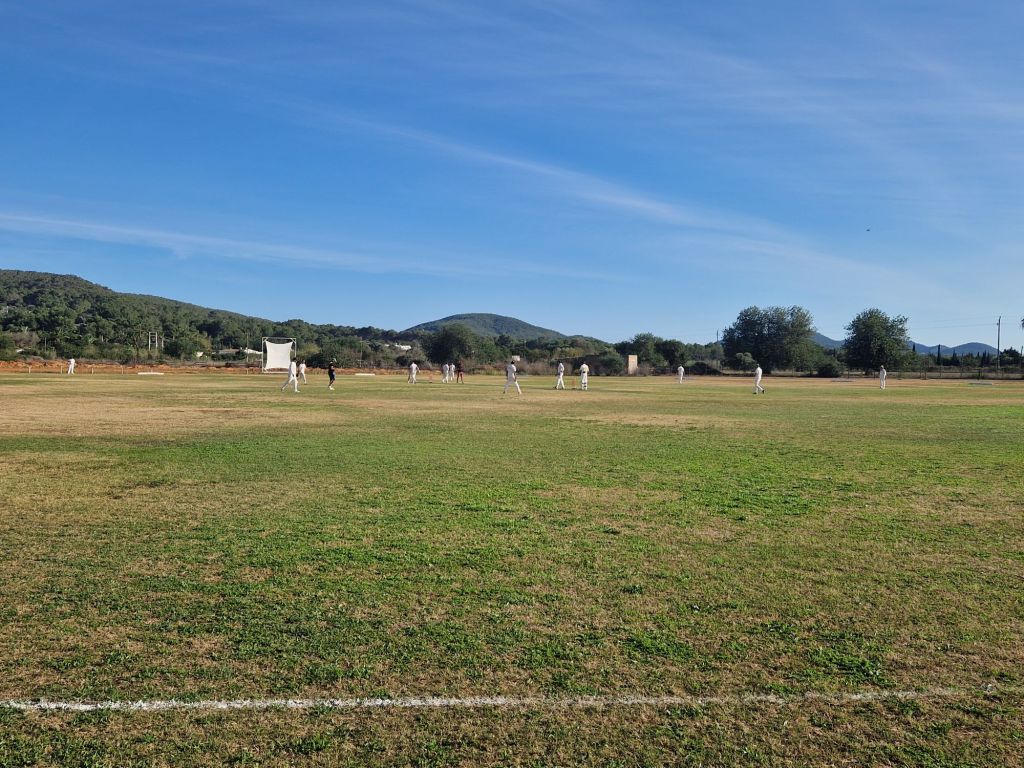
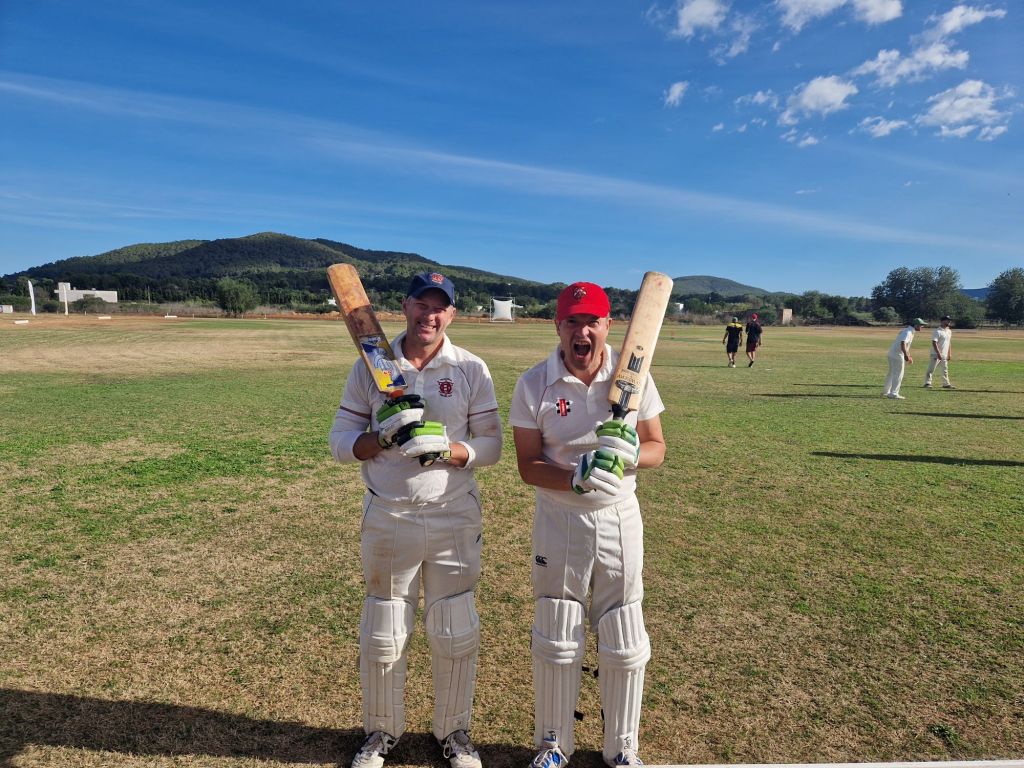
Carnes March Oval, Sunday 20 October 2024. Ibiza CC 161-3 (20 overs: Mathew Bartley 88) beat St Anne’s Allstars 130-7 (20 overs: Jan-Hendrik Rossouw 63, Mike Amos 3-18, Paul Cruttwell 2-6) by 31 runs.
Report by Garreth Duncan – Photos by Garreth Duncan and Phani Sainath
And so to our second tour fixture … what would Sunday hold? For the second day in succession, we gave it a fantastic go and gave much stronger opponents a real fright – only to fall short once again in the closing overs.
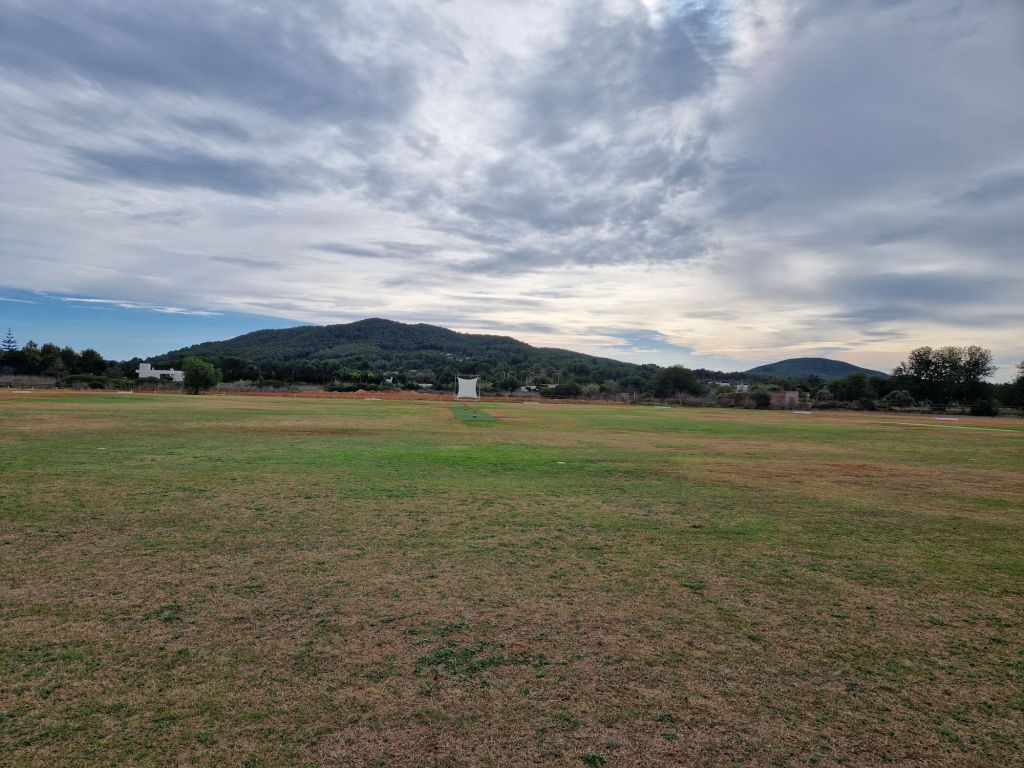
Ibiza CC have come an incredibly long way since our previous tour in 2009, when we played them on an artificial football pitch. Over the last five years, they have built a stunning ground and club house in the north of the island, and boast an equally slick online and social media presence to go with it. They regularly welcome two touring teams each weekend, and look after us all very well with Lyn and her team doing some great teas.
There were a few Allstars feeling a bit delicate having enjoyed the final night of Ibiza’s 2024 nightclub season, and we arrived to hear ominous reports from the morning T20 fixture – despite assistance from the advance party of Matt Biss, Alfie Arrand and Gren Thompson, Ibiza had crushed Wookey Hole by 10 wickets with plenty overs to spare. To ensure we at least got a full game in, skipper Gren asked Ibiza to bat first on winning the toss, despite the heat and my chunterings that we always do this against strong opposition – and when Ibiza opener Mathew Bartley crashed each of Alfie’s perfectly good first three deliveries for four, we all must have feared another absolute hammering.
But the 2024 Allstars tour party has courage by the bucket load, and we reined in the scoring rate as Jan-Hendrik Rossouw, now back in Allstars colours after helping out the Wookeys the previous day, began with a fine spell. We quickly realised the best way to deal with Bartley was to keep him away from the strike, and although our friend Rupert Style lived up to his name once again with some fine shots of his own, we’d kept Ibiza down to 72-0 at the halfway stage.
Vivek Seth got the first breakthough as Style was smartly taken by Matt behind the stumps, before skipper Gren, who has enjoyed the best season of his long Allstars career, got the next as he bowled Bartley twelve short of his hundred. Jan also picked up a deserved wicket by bowling the dangerous Sam Feasey, and Ibiza finished on 161-3 – an incredible effort by the Allstars in the field against opposition who regularly pass 200 in T20s.
We were keen to get Jan back out there before all the Red Bull from the night before wore off, and together with Nick Chadwick, his batting unimpeded by the calf injury he sustained on Saturday, we got off to a flying start, as 38 came off the first four overs. Although Chadders’ fun was ended as Rory Thomson knocked his stumps back, Jan continued imperiously as he raced to his fifty off just 30 deliveries. With Sirmad Shafique providing solid support, Ibiza seemed unable to stem the flow of runs, and at the drinks break we were 89-1 and could dream of victory.
But Ibiza are a formidable force, and they powered back into the game as six Allstars wickets fell for just 11 runs. Paul Cruttwell, who has done so much for their club, began the slide as Sirmad, greatly restricted by a groin injury, charged at him and was stumped – and then got the big break as he ended Jan’s mighty innings with a caught and bowled. How we wish Beckenham could let him play for us more often.
Gren promoted KP to try and keep the momentum going – but Mike Amos quickly snuffed out the dream with three quick wickets, dismissing KP, Joe Silmon and Kiran Chittajallu as they went for attacking shots and running out Phani Sainath. Alfie hit out bravely for the second game in succession – but the run rate was now beyond us and Ibiza closed the game out.
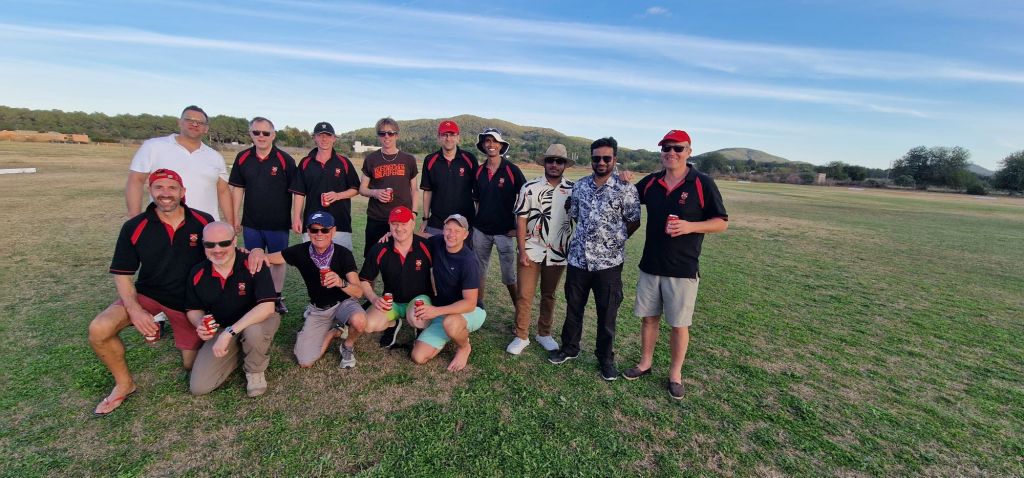
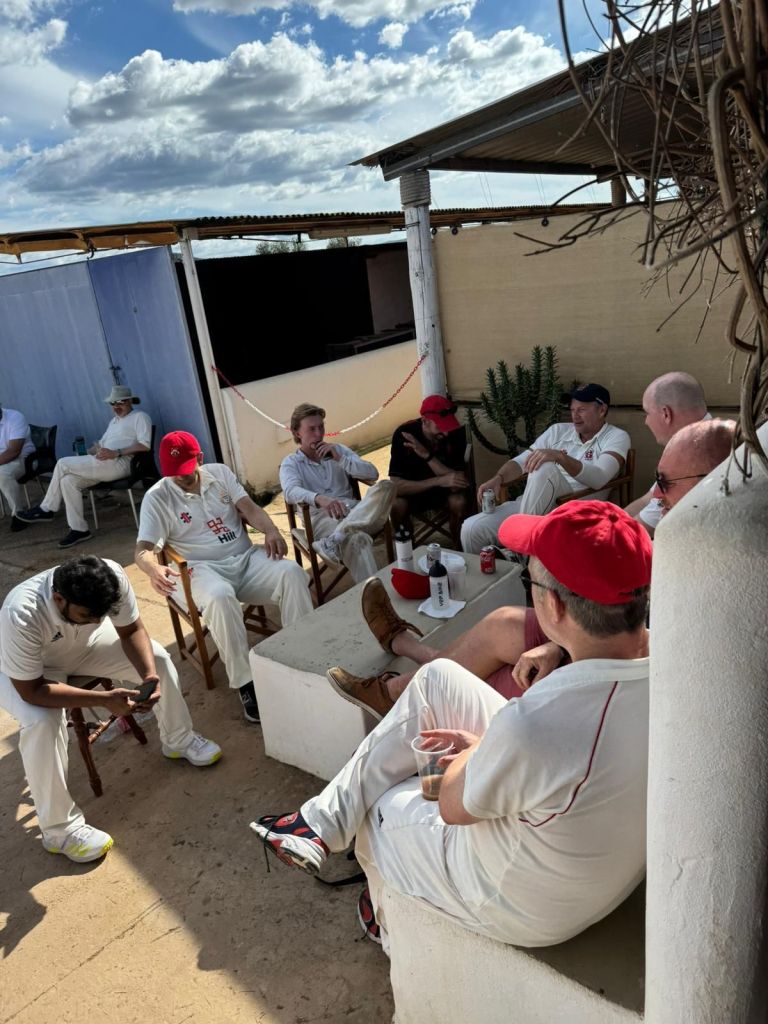
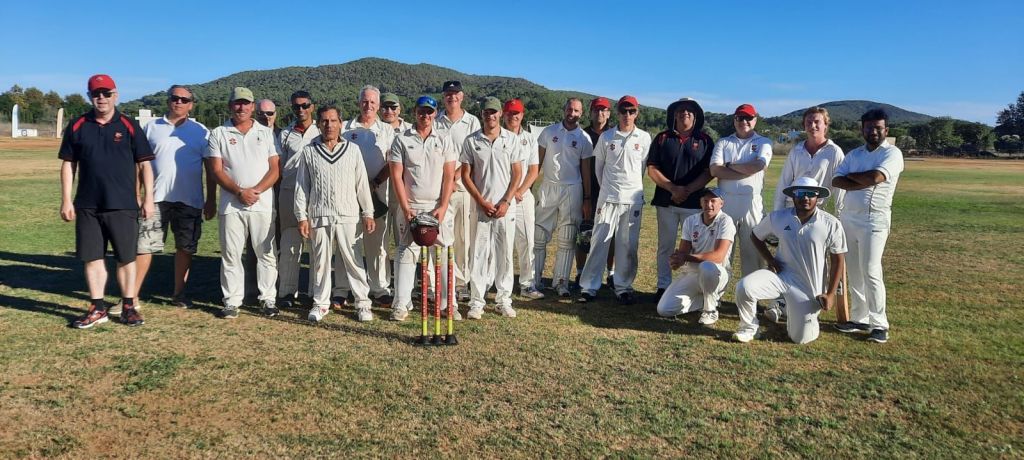
Ibiza were terrific hosts, and their secretary Martin has done a terrific job in promoting and showcasing the club amongst his many other commitments – and his team mates didn’t miss the chance to remind of him of this appearance on last year’s TV series of My Mum, Your Dad. As the sun went down, we swapped caps as a reminder of a great weekend’s cricket.
So ended another terrific Allstars tour, as we all chilled out with the opposition before heading for pizza back in San Antonio. Some incredible memories, new friends made and old ones caught up with – where will 2025 take us?
Wookey Hole CC 197-7 (35 overs: Charlie Benson 66, Alfie Arrand 2-30, Paul Bowman 2-38) beat St Anne’s Allstars 172-7 (35 overs: Matt Biss 67, Mark Benson 2-11) by 25 runs.
Report by Garreth Duncan – Photos by Garreth Duncan and David Healy (Wookey Hole)
After an enjoyable couple of days with everyone settled into our Ibiza tour, we headed off to Ibiza CC’s ground to face Wookey Hole, from Somerset, in our first match of the tour.
It’s fair to say the Wookeys’ tour squad was somewhat depleted. They’d already let us know during the week that they were short on numbers – and having arrived on the island, injuries and a sleepless night caused by a screaming baby hit them yet further, meaning they arrived at the ground with only six of them in a fit state to play. Ibiza CC’s Rupert Style boosted their numbers – and Vivek, captaining the Allstars, generously helped them out by lending them our best player, the brilliant South African Jan-Hendrik Rossouw. Perhaps more stingily, Sir Viv also offered me up to the opposition, despite my dodgy shoulder limiting my cricketing ability even more than normal.
Viv won the toss and, with the 11am start meaning the weather was still cool and a bit of cloud cover overhead, sensibly elected to field. It quickly became apparent that Ibiza’s newly laid artificial pitch offered considerably more bounce than most of the surfaces we’re used to back home, and Gren Thompson and Alfie Arrand took full advantage ot it with excellent opening spells. Gren struck first as the dangerous Dan Vasselli nicked a rising ball to Samer Hafiz behind the stumps, then Alfie weighed in next over as Style was stylishly caught at slip by Paul “KP” Bowman, returning to Allstars action for the first time since our France tour, to leave the Wookeys 13-2.
Neil Chambers and Mark Benson repaired a bit of the damage – but a double strike from the Allstars Foreign Legion put us in control once again. Nick Chadwick struck with his third ball, removing Benson to another smart slip catch by KP – but that ball proved to be the last of Chadders’ day as he pinged a calf muscle in the delivery. Joe Silmon completed the over and then grabbed a wicket of his own as Chadders took our third slip catch of the day – more than we’ve managed the whole of the regular season- to make it 56-4.
Charlie Benson replaced his dad at the crease, and instantly began to show his class with a flurry of boundaries. With support from Dave Healy, he began to drag the Wookeys out of the hole they’d got in. A couple of tough chances went down, and with a bit of uneven ground at the boundary edge making fielding out there treacherous, a few ones started to become fours. Skipper Vivek was especially unlucky to go wicketless in an excellent spell, and the score kept moving. It was only another unfortunate injury that eventually separated the Wookey pair, another nasty bounce resulting in Healy being hit in the stomach and unable to continue.
Benson Junior had reached a splendid fifty before the returning Alfie finally ended his stay, first time tourist Kiran Chittajallu taking an excellent catch at square leg. KP, happily recovered from the shoulder injury that had cut short his regular season in Northern Ireland, was getting into a good rhythm and bowled Dave Izzard – bringing the two Allstars guest players together, as I walked out to join Jan. I kept KP’s first ball out before clouting a couple of boundaries off another of our tour debutants, Phani Sainath – but KP had the last word as he knocked over my stumps in the final over. Vasselli, returning to bat as lowest scorer, hit three boundaries off the final over, showing what a good job we’d done to get him out so cheaply first time around. Wookey Hole’s final score of 197-7 looked more than respectable – but with a decent batting line up and on a lightning fast outfield, we had a good chance of chasing it.
Charlie Benson looked just as handy with ball in hand as with bat, and got as much life from the pitch as the Allstars quicks had done. Sirmad Shafique, back on tour again having excelled with the bat in Portugal, was unlucky to get out as a nasty lifter hit him on the shoulder and looped up to Jan at slip. Kiran bravely came out at three and helped Matt Biss see off the openers – but when the recovered Healy trapped him plumb in front, we were 39-2.
Even if (as he tells us) his many other 2024 cricketing appearances have been less successful, this season has been far and away Matt’s finest for the Allstars. Settled in his favourite opener’s anchor role, and with the cricketing nous and good humour to encourage all around him, he has become a huge asset to our team – and having got himself set, he began to accelerate as he passed fifty. With Samer providing stout support and hitting a few crisp boundaries of his own, with 16 overs left we were 93-2 and with a shout of a first overseas tour victory since our triumph in the Dordogne in 2010.
But the Force was strong with the depleted Wookeys, and with a big bit of help from the Allstar rebels, they rose again to take the game from us. Chambers broke the stand as Samer was caught on the cow boundary, and then Matt’s splendid innings ended as Gren caught him at point. Joe and Sai continued the Allstar resistance – but Jan had a hand in both their dismissals as he caught Sai before bowling Joe. KP gave Mark Benson a second wicket as he was bowled trying to attack, and though Gren and Alfie both hit out with some crunching boundaries in the closing overs, the target proved just beyond our reach.
So the first tour game ended with the reinforced Wookeys tasting victory. But more importantly, a fantastic day’s cricket and a whole set of new friends made. We had much to look forward to as we both faced Ibiza in T20s the following day – but would either side survive Saturday night in San Antonio?
An enthralling match. A narrow win. Nice weather. A pleasant venue. And a friendly oppo.
Altogether, what they call in the trade ‘a good day out’. But the real success was getting a full side on the field in the first place.
Recruitment had not been straightforward. This fixture took us to Avery Hill Park in the Royal Borough of Greenwich. And for our visit to the home of time, we had to show some latitude on team selection.
In truth, I was a rusty match manager. This was the first Allstars fixture I’d overseen for three years, and as luck would have it, Spond revealed a grand total of six players had made themselves available.
Hence I began the usual process of trying to force people to play a cricket match. “Hello, you barely know who I am, but would you like to traipse to the arse-end of south-east London to chase leather for me all day?”
Every tactic from subtle persuasion to blackmail and outright coercion failed to yield dividends. In desperation I turned to the Fixture List, our sport’s version of Grindr – providing casual hook-ups for the cricketing desperate.
For those unfamiliar, the Fixture List website links up clubs looking for extra players with players looking for a game. It supplies both swings and roundabouts. Yes, it can solve a problem – but you also have to kiss a lot of frogs: inquiries which go nowhere, and respondents who are time wasters.
Using the Fixture List is not unlike trying to sell a baby buggy on Facebook Marketplace.
‘Hi, is your buggy still for sale?’
‘Yes. Would you like it?’
And you never hear from them again.
So after placing a listing on the site, and as replies began to trickle in, I played a mix of hardball and conviviality: showing appreciation for their interest but also determining whether they were serious and organised and reliable.
I asked questions. I assessed. I filtered. Those who passed my ‘tests’ were admitted to the holy sanctum of the WhatsApp group. Slowly but surely, I acquired a viable squad.
In fact, by Saturday night I had twelve players. But at 9pm I sustained a double-loss. One player, a regular Allstar, broke the discouraging news he was in Accident and Emergency. A second – one of five ‘guests’ from the Fixture List – messaged me to say he had a ‘family emergency’, words which for more than a century have been cricket code for ‘can’t be bothered’.
With fifteen hours to go, the squadometer now read 10, although the sub-XI total was partly mitigated by (a) the likely contribution of Felix’s son (my nephew Ned), and (b) Vivek could hang around for a while, after dropping off the kit, before returning to Shoreham to look after his dog.
All this generated the exact variety of exciting jeopardy which firmly distinguishes the experience of a village cricket captain from the likes of, say, Ollie Pope. He may have struggled for runs in his first two outings as England stand-in captain, but he didn’t arrive at Lord’s worrying whether four blokes he’d found on the internet would actually show up – or a fielding strategy based on an eight-year-old and a guy who had to leave early to walk the dog.
Against this backdrop, matchday dawned, and we sashayed our merry way to Avery Hill – which itself introduced another, geographical, layer of uncertainty. We’d never hired or even seen the venue before. As with four of our squad, it was an internet blind date – booked simply on the basis of being cheap (£109) and crucially, available.
This could easily have gone terribly wrong, but in truth, we lucked out. Upon arrival it was quickly and universally agreed that Avery Hill was A Nice Ground.
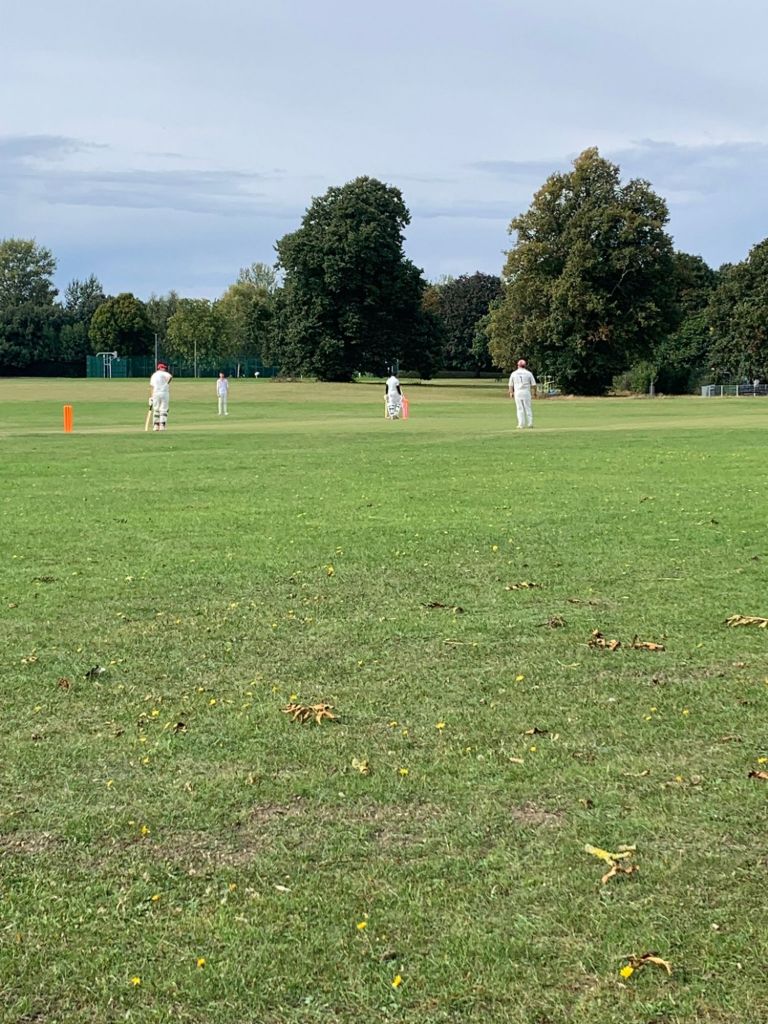
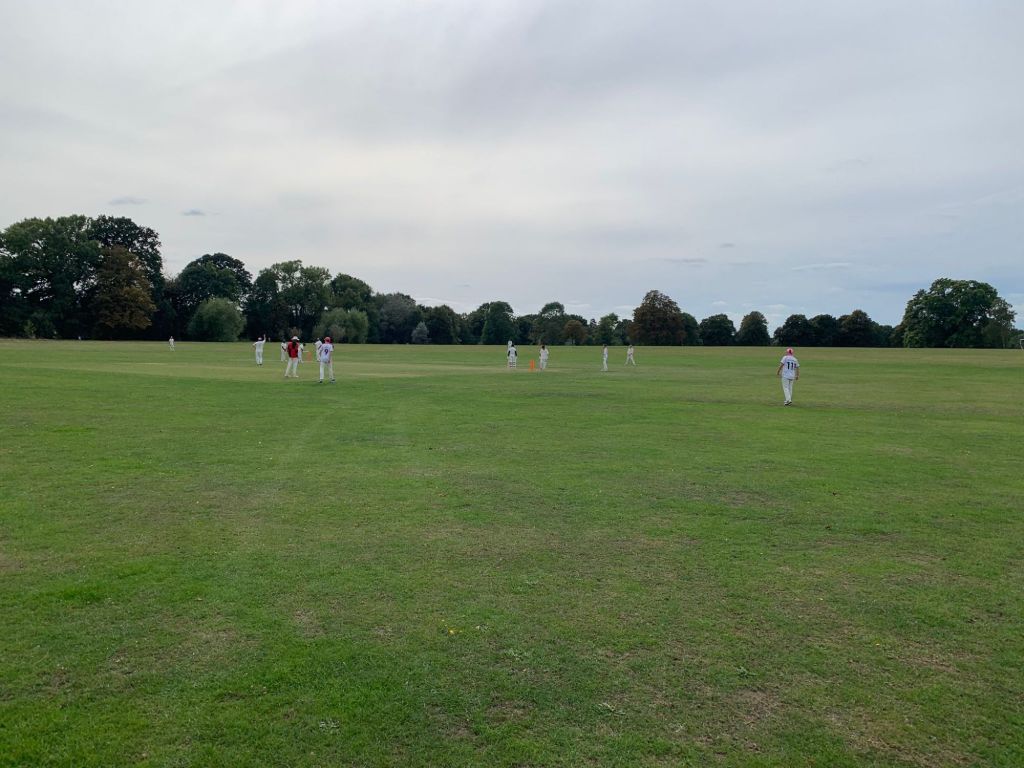
OK, the actual pitch was a bit meh. But there was a pleasing vista, undulating across felicitously apportioned greensward to the glass-domed Winter Gardens botanical house. There was a new-looking cafe and playground. The lavatories boasted generous provision of real loo rolls. And for a council park ground, there was a refreshing absence of motorbikes, nitrous oxide canisters, and the emergency services.
But pleasant as it was, not everyone found the venue easy to locate. En route, two Fixture Listers rang me to say they’d got lost. This set me the interesting challenge of trying to direct people I’ve never met, to a place I’d never been to.
Meanwhile, as our squad members trickled in, Plastics’ captain – a smooth operator by the name of Roger Golding – summoned me for the toss, which I won. Electing to make first use of the pitch, I considered my strategic options for the batting order.
On this subject, there are competing schools of thought. Some argue for steady accumulation. Others advocate bold strokeplay from the get-go. In the end I plumped for a third option: a top order comprised of the players who had actually turned up. Therefore, people batted in the sequence in which they arrived.
As play got underway, my thoughts turned to the consideration that 37% of the team were completely unknown quantities. What would happen? They might be brilliant players, terrible players, or – for all I knew – raging sociopaths on day-release from Wormwood Scrubs.
In the event, it couldn’t have worked out any better. All four proved to be really nice chaps, who totally ‘got’ what the Allstars are about. They were also – to a man – very decent cricketers, but not *too* good, if you know what I mean. It wasn’t cheating to have them.
But I did not know this when I sent two of them out to open the batting. And now another issue emerged: I could not for the life of me remember anyone’s names.
Remember, I’d not played for three years. Aside from the Fixture Listers, there were also two regulars I’d never met before – Mathan and John – and I hadn’t seen Samer for a long time either. Pretty much the only player I was entirely confident about was Felix – who had the advantage of being my brother.
This amounted to a problem in making sense of the opening partnership between two of our brand-new guests, whose identities were a total mystery to me. It hardly helped they were the same height, both wore helmets, and were identically dressed. All I can tell you is there were good shots from Whatshisname and some confident strokeplay from The Other Fella.
The ball frequently reached the boundary. A few catching chances were offered but not accepted. Things went well. A bit too well, really. We reached 95-0 after 13 overs. So I decided to retire each of the openers when they reached 50.
[Editor’s note: Vijay Mishra struck seven 4s and two 6s for his fine unbeaten half-century, which he reached in 42 balls. At the other end, Anand Pichaimani made nine 4s and one 6, in his equally fine 37-ball fifty.]
These retirements were to have significant implications later in the match. At the time, they were purely acts of unilateral disarmament, as I’d not pre-agreed a retirement policy with the oppo. My intention was to open up the game, and it worked. With new batsmen at the crease, the tone changed. The bowlers had fresh purpose, runs grew harder to come by, and wickets began to fall.
Vivek Seth and newbie Uffan Salimi were the pair who replaced the openers, but neither lasted as long as they may have wished. Both were caught in the ring off leading edges. Having previously dropped everything, Plastics now began to catch everything, and all our wickets were to fall by this mode of dismissal.
That first brace of catches brought batsmen five and six to the crease – Mathan Olaganathan, and Samer Hafiz – and also a long phase of equality between bat and ball. The bowling was tidy and the pitch (which had the character of grumpy plasticine) became uncooperative. Sweet timing proved elusive, but both Samer and particularly Mathan took the scoring opportunities when offered.
Their partnership had realised 63 runs when Samer chipped another catch to the ring. However, it also used up 11 overs, and this relatively slow progress constrained us from batting Plastics out of sight. We continued in this vein for the remaining nine overs of our innings, scoring enough runs to make progress, but too few to secure the game. Felix had a poke about, and after Mathan’s dismissal for 40, John Kingston batted busily enough – with support from debutant Zain Javed and Gren Thompson – to get us to a total of 208.
At the time, I thought this was probably enough to win – and I was right, but only just. It soon became clear that Plastics’ batting was their stronger suit. Our bowlers generally bowled faster than theirs, but the extra pace made timing easier and the boundary seem shorter.
Such was the case from the very start of the innings. My initial bowling choices were determined partly by the imperative of canine exercise. One end was allocated to Vivek, so he could have a couple of overs before heading back to West Sussex for walkies.
At the other, Gren glided in with his customary speed and grace, rather like the Lloyds black horse, except with longer legs. He dispatched some excellent stuff, but any lapses in length were seized upon by Plastics’ captain Roger Golding, who looked rather tasty.
So did his partner Peter Bishop, until he attempted to whip Gren off his legs. The shot was a touch too ambitious, especially to such a lavishly swinging delivery. Its parabola resembled the type of banana of which EU officials would take a very dim view. The subsequent sound of ball on wood derived from Mr Bishop’s forlorn middle stump.
His successor, Dom Gillan, struck some meaty blows before falling victim to a ripper from Uffan Salimi. Although at that stage I was still unsure of his name, I had no doubts about the attractive quality of his off-spin, which supplied from the pavilion end (by pavilion, I mean kit bags strewn about).
Meanwhile, Mathan had replaced Gren and consolidated his reputation as one of those characters who’s just good at everything. He bowled briskly and accurately, and attacked the stumps with single-minded determination. His reward came with the wicket of Matthew Webb, whose innings was chiefly notable for a remarkably low-buttocked stance less associated with cricket than the moment in a game of Twister where you have to keep your foot on purple while reaching for green.
64-3 became 79-4 when Zain’s leg-spin induced a top edge from Plastics’ Robert Bishop, snaffled by wicketkeeper Anand. While the wickets fell, Roger Golding stood firm, and played what was probably the innings of the match. This was ‘proper’ batting. Above all, he was ruthless with anything overpitched and reeled off a series of crisp front-foot strokes, which earned him seven fours, including a regal off-drive (off Gren) of unimprovable peachiness.
So you can imagine our relief when Roger retired himself upon reaching 50, with Plastics’ score on around 100. On his part, this was a very magnanimous decision. He and I had no pre-agreement on retirements. He didn’t have to do it and only did it because we had done it. I tried to call Roger back, but he insisted, and the die was cast.
Shortly afterwards, Vijay trapped James Sandham leg before, and with Plastics now 109-5, I thought the match was won. It wasn’t to prove quite so simple. Plastics batted deep, and resourcefully.
Now at the crease was Murtaza Rizvi, who at first seemed hesitant but settled into a watchful innings in which bad balls were punished. Alongside him was Charlie Bradbury. He boasted an extremely good eye and forearms which wouldn’t look out of place if served for Christmas dinner.
Overall, Charlie was the kind of batsman I hate in village cricket, because he had that uncanny knack of hitting the ball exactly where the fielders weren’t and in fact never expected to be. He crunched it behind square. He dinked it over third man. He walloped it betwixt mid-wicket and long-on.
Game on.
Adding to my captaincy challenge were numerous fielding constraints. By this point Vivek had left. Instead we had Ned, Felix’s son, promoted from the Allstars Under-Nines squad. He applied himself extremely well. But for an eight-year-old in a full-scale adult cricket match, there are limitations. For one thing – and understandably – he wanted to field quite close to his dad. For long periods we had two mid-ons, three yards apart.
About half-way through the innings, Ned also had to depart, for a swimming lesson. This reduced us to ten players, and eight outfielders. In the circs it seemed churlish to ask the oppo for a spare, so we were left with more and bigger gaps in the field.
The difficulties were exacerbated by a distinctly two-tier hierarchy of fielding effectiveness. The four Fixture Listers – Zain, Uffan, Vijay, and Anand – plus Mathan and Gren, were youthful, lithe and quick. The rest of us were either old, injured, unfit, had a bad back, or in my case, all four.
When the ball was struck in our direction, the pursuit resembled someone walking through treacle while carrying heavy suitcases. And even after we finally apprehended the ball, the batsmen were easily able to run another two in the time we took to bend down and pick it up.
The fitter, faster fielders posed their own problem, because I still could not recall their names, at least not with confidence, and I kept mixing them up.
That had been awkward enough when we were batting and I could address individuals, face to face. It was all the trickier in the field, when there were loads of them, mostly far away, and I was required to attract the correct person’s attention in order to change their position.
“You over there, could you get to square leg? No not you. I mean…er…you“.
And so on.
Somehow, we just about kept a lid on things, largely due to some very decent bowling. We seemed to have a conveyor belt of proper bowlers, each one providing pace, accuracy, and good economy against accomplished batsmen. Gren finished with 2-27 from his seven overs. Mathan took 2-21 from his six. Vijay returned an equally impressive 1-28 from seven.
As a consequence, we held Plastics at bay, but only by a small degree. For the final 20 overs of their innings they were always about 15-20 runs behind the equation. This never seemed to change, although as the finish approached, the margins grew tighter.
With the score on 178, Mathan finally removed the obdurate Murtaza, ending a sixth-wicket stand of 69. Charlie continued to bash away. But crucially, he then reached his fifty – having struck six fours, and a six – and Roger retired him.
Like before, this was a very magnanimous act, as there’d been no official arrangement. Arguably it cost Plastics the match. On the other hand, if I’d not made the original decision to retire Vijay and Anand, they’d likely have batted Plastics out of the game before any real contest developed.
Tom King and Ian Whitfield were the new batsmen charged with getting Plastics over the line. The atmosphere grew tense. The end-of-over scores weren’t recorded, but they required roughly 20 from the last two, and 14 from the final over.
This meant they needed boundaries. But they didn’t get them. Gren and Mathan calmly closed things out, and we won by seven runs.
This completed an almost perfect Allstars match. Everyone got to bat and bowl. Everyone either scored runs or took wickets. And we won, but only narrowly and after a close contest played in a positive and friendly spirit by two sides who got on very well.
Indeed, in the pub afterwards, the Plastics proved excellent chaps and very good company. But I couldn’t remember their names either.
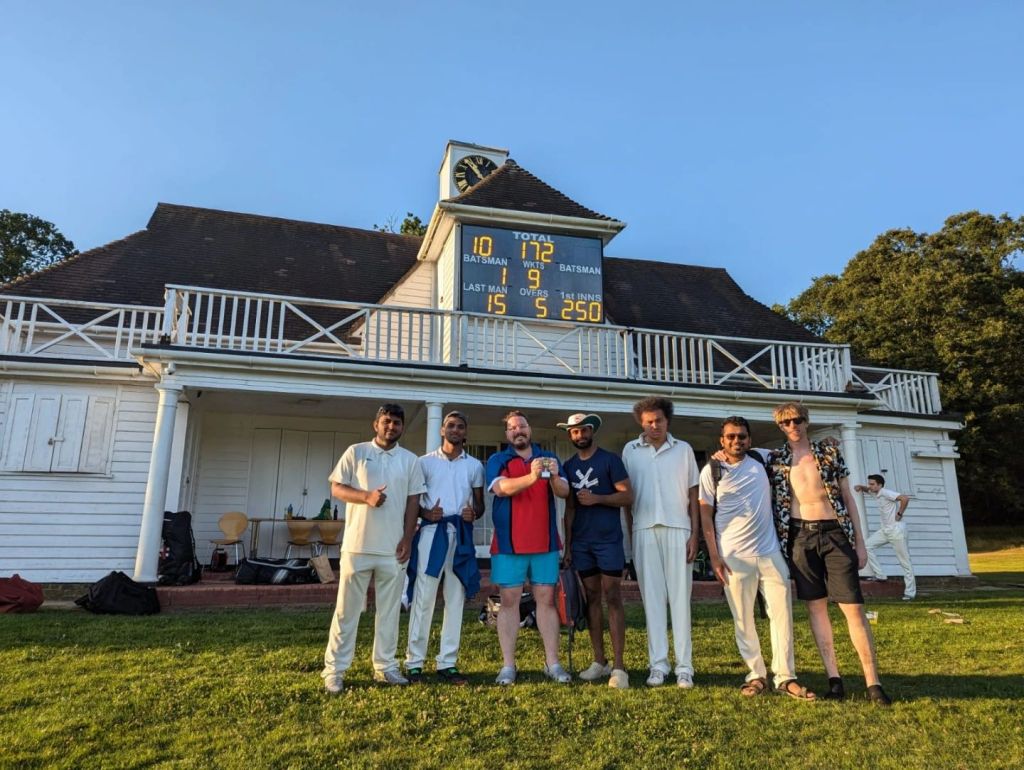
St Anne’s Allstars 250 (52.5 overs: Mathan Olaganathan 63, Matt Biss 33, Imran Razaq 33, Tom Taylor 5-54) beat Mighty Wanderers 172 all out (42.4 overs: Pansindu Kumarasena 3-8) by 78 runs to retain the James Abrahams Trophy.
Report by Sheahan Arnott – Photos by Sheahan Arnott and Nathaniel Hill
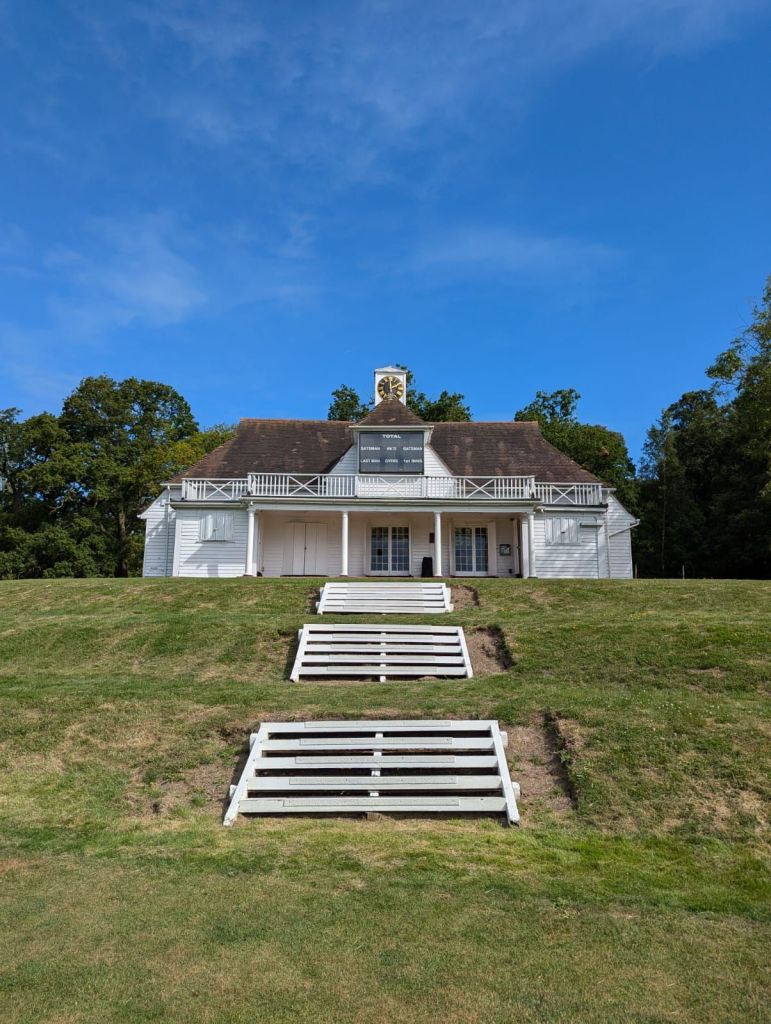
Mill Hill School is quite the ground to get to. Set inside a gated community on the grounds of an old stately home located sufficiently outside London to safeguard the attendees from “dangers both physical and moral awaiting youth while passing through the streets of a large, crowded and corrupt city” as John Pye-Smith wrote in 1807.
Well it’s not outside London these days – albeit about half-an-hour further out of London than where Dick Whittington supposedly heard the Bow Bells tell him he’d be Lord Mayor one day – but it definitely feels like a place you’d find in a PG Wodehouse novel more so than our fixture list.
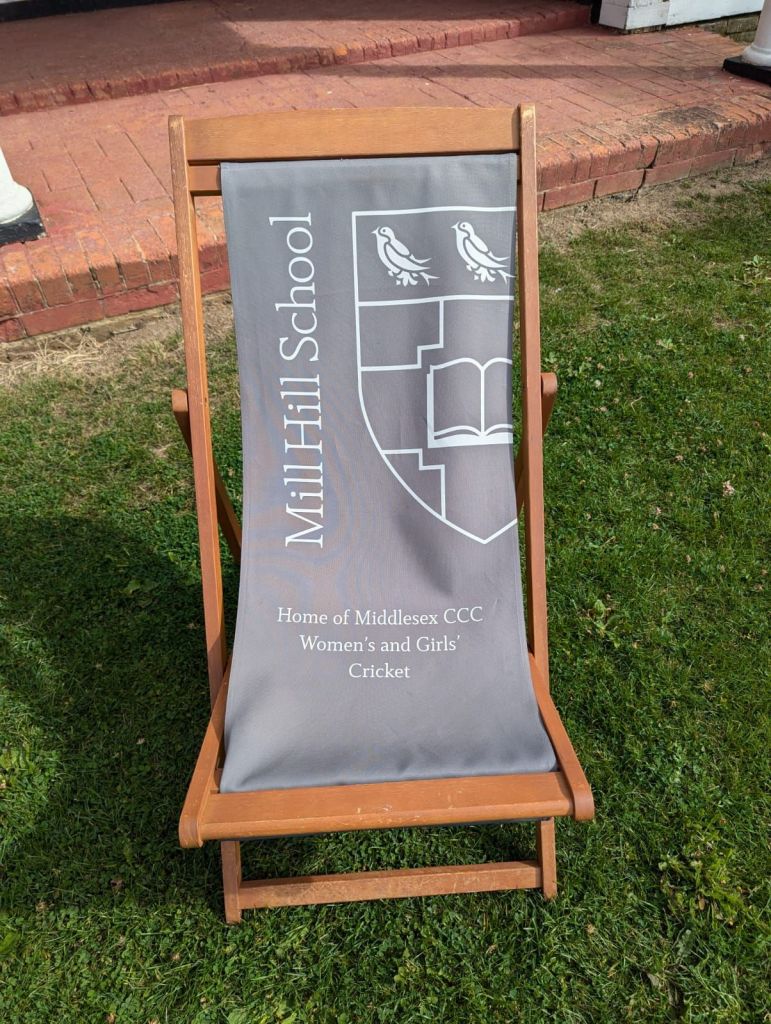
And with branded deckchairs outside the historic pavilion (as the Inspector Morse episode Deceived in Flight), it wouldn’t have been hard to imagine Stiffy Byng reclined in one telling Stinker Pinker that she thought he’d got a rough decision from the umpire had I not been guiding everyone to the ground like a human lighthouse.
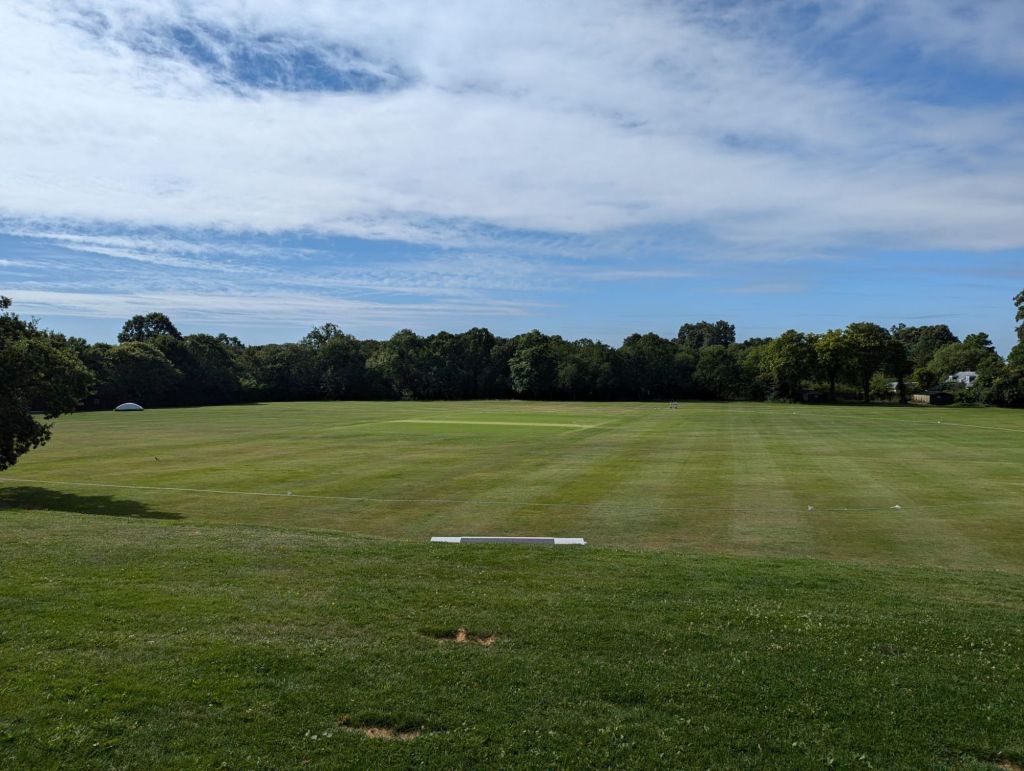
Getting a team together during the week had been laborious, but we had a full complement by the time we tossed and had loaned Sai to our opposition to square us up at 10 v 10. Wanderers skipper James Knight won the toss and sent us in. I was pretty happy that we’d get first use of an outstanding looking wicket, a fast outfield and leave them to swelter in the blazing English sun for a few hours.
We’d agreed to a much longer format than we’d usually play – 100 overs with lunch and tea breaks, and a few of us reckoned it had been about 20 years since we’d played a game that started before midday, but Matt Biss and Imran Razaq strode to the crease just before 11am and the game began.
Regular Allstars will know that making it to the end of the first over without losing a wicket is a fantastic achievement, so when Matt and Imran made it to drinks with their partnership unbroken, we were already in unfamiliar territory.
Mighty Wanderers bowled well with Imran taking full toll on anything loose, and riding his luck with three dropped catches. At the other end, Matt was his usual indefatigable self, blunting the best attack we’ve played against in a long while.
Imran fell three balls after drinks, bringing the WG Grace-esque figure of Tahir Younis to the crease on debut. He wasted no time showing he’s a class bat, but lost his stumps to Nick Charlton for 14, before Sajid Mahmood did the same to Tom Taylor an over later. Bassem Khan became Nick’s third victim – and our third wicket in as many overs – to leave us at 70/4 and in real danger of throwing away an excellent start.
Mathan Olaganathan refused to be overawed by the situation, flicking his second ball for 4 off his toes and somewhat calming my captain’s nerves. Matt and Mathan dug in against some excellent bowling, with Mathan showing a full range of glorious shots at one end while Matt negotiated challenging bowling at the other.
Mathan brought up his half century off 48 balls, and after some very angry calls with Domino’s employees, we broke for lunch at 165/4 in a much stronger position than we’d looked 20 overs earlier.
We’d faced 40 overs, and I told the not out batters to hold out the next four overs and we could start to accelerate our scoring and push towards an imposing total. Mathan, however, didn’t take this on board and was bowled first ball after lunch for a classy 63 in a critical partnership of 95. Harshad Keskar picked up where Mathan left off, and added 40 or so in rapid time before Matt’s vigil came to an end.
I don’t think my writing can do justice to just how well Matt batted. He gave a solitary chance in his first 120 balls – a catch to cover that was called a no-ball – before finally getting out attempting to lift the scoring rate. It was a hot, long day at the crease against a very good bowling attack, and he was more than equal to the task.
In the end, the scorebook says he made 33, but they were worth a lot more than that given leadership and experience at the crease helped keep our more aggressive batters’ heads in the game. I’m not sure if anyone else in club history has faced as many balls in an innings, and I’m not sure I’ve played with anyone else who could.
Nathaniel Hill came and went first ball, and – in a role reversal of last season’s game – I came to the crease on a hat trick. With the hat trick ball negotiated, it was time to add some mayo to our score, and consecutive boundaries did just that. Harshad and I took full toll on a tired attack, before Pansindu Kumarasena replaced Harshad and kept the rate up.
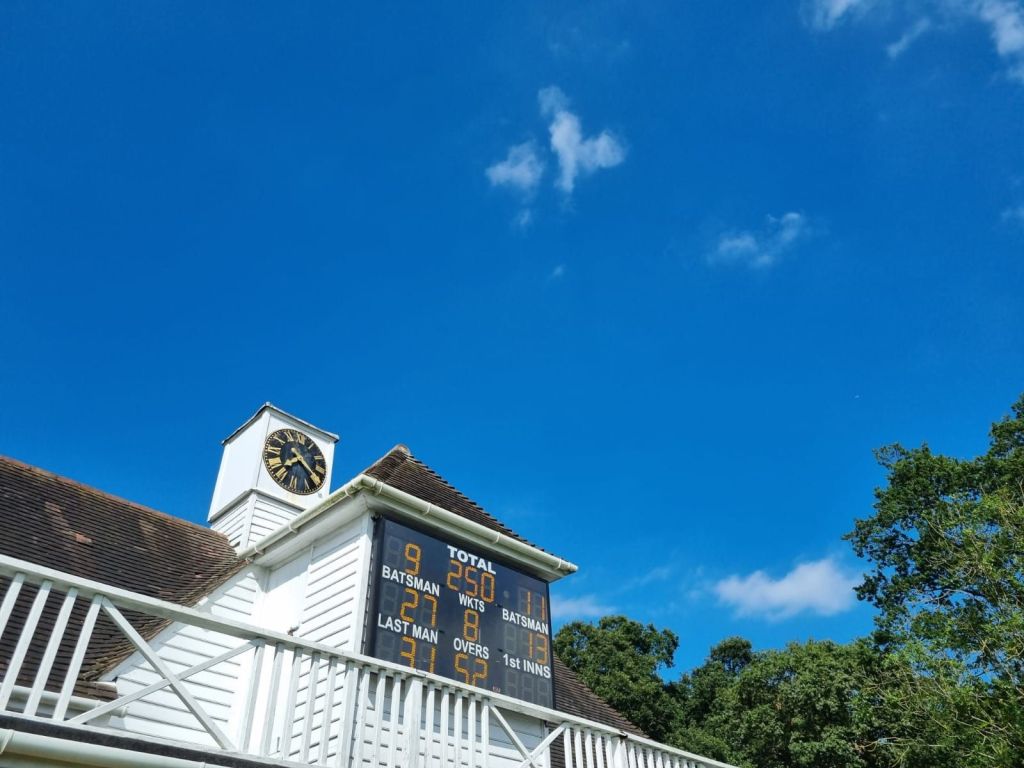
A flat six over long-on brought up our 250, and as the fielders went to look for the ball in the undergrowth, I called out to their captain and said we’d declare having batted 53.4 overs. He told me they’d found the ball, and I asked the bowler whether he’d taken 4 or 5 wickets. He told me four, so we “undeclared” to give him two balls to see if he could take his fifth wicket. He only needed one as I hit a catch to long on and wrapped up the innings.
Getting to 250 from 70/4 was an outstanding effort from (just about) everyone who batted, and I knew we had more than enough runs to win if we took early wickets, but with 47 overs remaining in the day would we have enough time…?
I told our bowlers that attacking the stumps would be key to us winning, and though Pansindu and Mathan didn’t bowl as though this applied to them, we did restrict scoring early. Pansindu got the first breakthrough, bowling Tim Maddison for 4 with a brutal ball that pitched on leg stump and hit middle (bowl at the stumps boys!).
Harshad got wickets two and three, and at 37/3 in the 15th over, we were looking good. Tom Taylor came to the crease and batted like he had somewhere else to be – because he did. A la Joe Root, he attempted to ramp the first ball he faced and pushed the scoring rate up and up.
Bassem snuck a ball through Rigby’s defence on 37 to take his first ever wicket, and Tahir went through Taylor on 40 to give him his first wicket for the club. A calamitous call nearly led to James Knight getting run out for a diamond duck. James certainly thought he was out when he threw his bat and remonstrated with his partner, but the umpire disagreed. With David Heafield looking untroubled at the other end, this was the partnership we needed to break to give ourselves a chance to win the game.
Not content with spending 40-something overs with his pads on, Matt volunteered to keep in lieu of there being any alternative. He snaffled his first catch off Harshad, but his second was even better – a sharp reflex catch off Irman to dismiss Knight that any keeper would be proud of.
We took our last drinks break at 6.35 (sorry, yes I know I said I’d be home early but we’re still going) and I brought Pansindu back on to bowl. Almost immediately, he bowled Tjasink leaving us two wickets from victory. Two wickets became one wicket, as Heafield slapped Pansindu to midwicket and Sajid took a tremendous, instinctive one-handed catch.
Both remaining batters were content to play for the draw, and as the overs counted down and down, I knew we had one last roll of the dice – Imran’s fizzing spinners from one end and Tahir’s loopy off-breaks from the other. But we never got to that last roll, as I sent an in-swinger through Shashank and knocked over his leg stump.
Had we not had last year’s last over thriller, taking the winning wicket with 25 balls remaining might be seen as a close result, but after 8+ hours on the cricket field, we were all absolutely stuffed and ready to go home.
And I am pleased to report the James Abrahams Trophy is back on my desk ready to spend the next 12 months where it spent the last.





 St Anne's Allstars